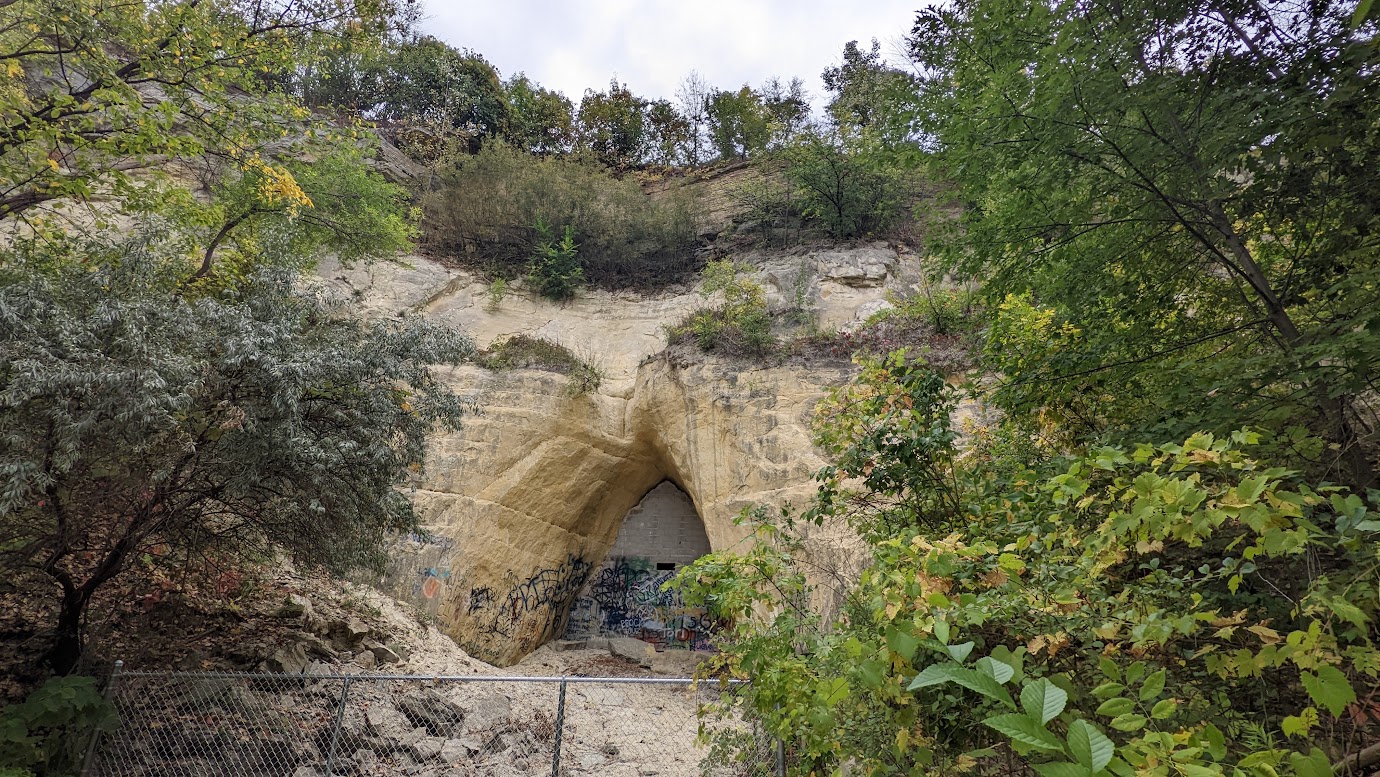
Photo of a cave formed in the St. Peter sandstone near St. Paul, MN. See the spray paint graffiti present on the walls outside of the cave. Image is original. September 2022.
Painting, carving, scratching, and chalking are all forms of graffiti on rock formations. This form of art has been practiced by cultures in every corner of the world, and this includes modern-day street art.
Chemicals in the paint can flake or weather off of the rocks, leaching into the soil below and contaminating surface and ground water. If chemical paint strippers are used to remove the graffiti, the chemicals in the solvents also contaminate the surrounding areas.
The effort to remove graffiti on natural rock surfaces, like sandblasting and scraping with brushes and spatulas, can crack the original rock, allowing water and bacteria to intrude and cause further damage. This impact is usually felt at national parks, where the beauty of the natural space is protected. However, the impact of paints and chalks on rocks outside of national parks, like seen along the river gorge in the Twin Cities, still causes problems.
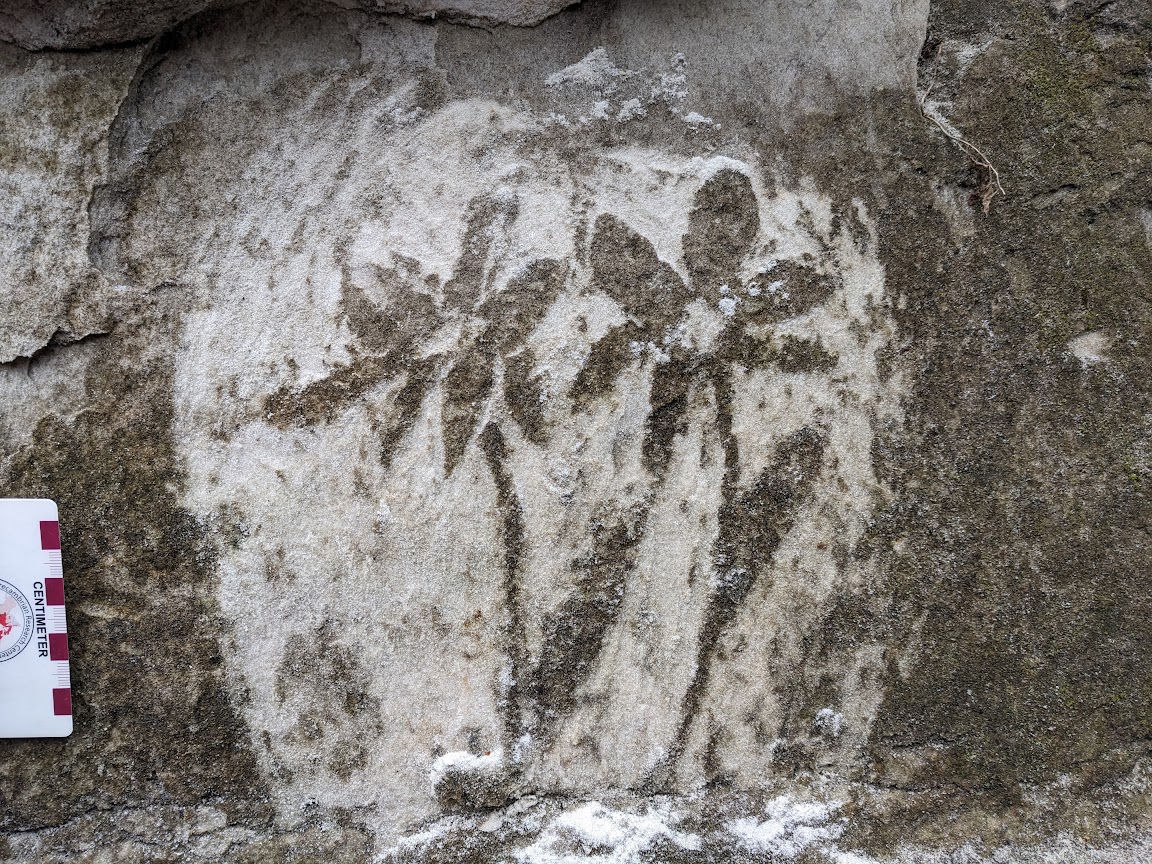
Photo of an etching made in the St. Peter sandstone at Bridal Veil Falls. The weathered surface of the rock has been scraped away, revealing the fresher (more white) grains beneath. Image is original. March 2026.
In trees and particularly loosely-cemented rocks, like the St. Peter Sandstone, people may etch art or lettering into the original material. When etching into a friable rock, this contributes to erosion, causing the original rock to physically weather away much faster than it would without human influence. When a sufficient amount of the rock is scraped away, it weakens the integrity of the rock, which can cause rock failure (i.e. a rockfall).